Reviewing Girl with Bare Back for Small Business Merch
As an embroidery designer who has spent years digitizing files and consulting with small business owners, I approach every new machine embroidery design with a critical eye. It is not just about whether a design looks pretty on a screen; it is about how it performs in the real world of commercial production. Today, I am reviewing Girl with Bare Back, a piece categorized under Boys and Embroidery, to determine its viability for branded merchandise, patches, and custom apparel.
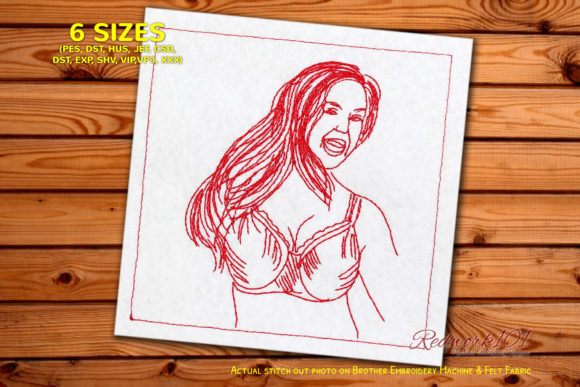
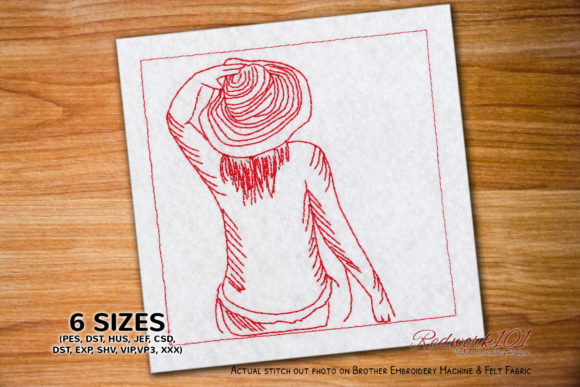
The product description highlights that this is a lovely redwork embroidery perfect for projects needing a delicate, feminine touch. It also notes that the Box Stitch shown in the picture is optional and that the color of the outer box is different. These details are crucial for a professional assessment. Let us dive into how this design holds up when applied to serious business assets like staff uniforms, tote bags, and boutique labels.
First Impressions and Visual Personality
When I first loaded the file for Girl with Bare Back, the immediate impression was one of understated elegance. Redwork, by definition, relies on single-color thread work, usually in shades of red, but modern interpretations allow for any monochromatic scheme. This simplicity is a double-edged sword. On one hand, it feels classic, rustic, and handmade. On the other, it risks looking sparse if not scaled correctly.
The "delicate, feminine touch" mentioned in the description suggests a line-art style rather than a filled, satin-stitch heavy design. For small business owners, this is advantageous. Low stitch density means faster run times on multi-needle machines and less puckering on lightweight fabrics. However, because it is categorized under Boys, there might be a disconnect in marketing if the visual language is strictly feminine. As a designer, I see this as an opportunity to rebrand the narrative. The silhouette or figure could easily represent innocence, nostalgia, or artistic flair, making it suitable for a broader range of brands beyond gender-specific categories.
Real-World Applications for Small Business Merch
The true test of any digital embroidery file is its versatility. Here is how Girl with Bare Back performs across common small business merchandising channels:
- Embroidered Patches: This is perhaps the strongest use case. Because redwork is essentially outline-based, it translates beautifully to cut-edge or merrowed edge patches. The optional Box Stitch mentioned in the description can serve as a border, containing the design and giving it a finished, badge-like appearance. This makes it ideal for sealing onto denim jackets, canvas backpacks, or tote bags.
- Apron Embroidery: For bakeries, florists, and craft studios, staff aprons are walking billboards. A delicate redwork design on the chest pocket or upper back adds a premium, artisanal feel without overwhelming the garment. It signals attention to detail and care, which aligns perfectly with handmade product branding.
- Tote Bag Design: Canvas totes are a staple for Etsy sellers and boutique shops. The low stitch count of Girl with Bare Back ensures that the fabric does not distort. The design acts as a subtle brand mark rather than a loud logo, appealing to customers who prefer minimalist aesthetics.
- Cap Embroidery: Applying this to curved surfaces like baseball caps requires caution. If the design is too wide, it will wrap around the curve and distort. However, if scaled down and placed on the side panel or used as a small center-front accent, it can add a unique, vintage-inspired touch to custom apparel.
Technical Considerations and Production Risks
While the aesthetic appeal is clear, we must address the technical realities of production. As a designer, I always advise clients to look beyond the preview image. Here are the critical factors to consider before running a full batch of commercial embroidery:
Stitch Density and Fabric Texture: Redwork designs rely on continuous lines. If the stitch length is too long, threads may snag on textured fabrics like terry cloth or coarse linen. Conversely, if the density is too high for a simple outline, it can cause perforation in thin materials. Always test on the actual fabric you intend to use. For dark uniforms, ensure you have a high-contrast thread color, as the "delicate" nature of the design might get lost if the thread blends too much with the background.
The Optional Box Stitch: The description notes that the Box Stitch is optional. From a structural standpoint, I highly recommend using it if you are creating patches or sewing onto stretchy fabrics. The box acts as a frame, stabilizing the inner design and preventing distortion during washing. Without it, the floating elements of the girl's figure might shift or pull over time.
Scale and Legibility: One common mistake with line-art designs is shrinking them too much. At very small sizes, such as a tiny chest logo on a polo shirt, the details of the "bare back" or facial features may merge into a blob. You must verify the minimum viable size. Create a printable mockup at 50%, 75%, and 100% scale to check for clarity before hooping your first sample.
Enhancing Brand Identity and Customer Trust
Why choose Girl with Bare Back over a generic clipart design? The answer lies in brand identity. In a market saturated with mass-produced goods, embroidered details signal quality. When a customer sees a well-executed redwork design on a tote bag or apron, they perceive the item as having higher value. It suggests that the business owner cares about the finishing touches.
This design supports a narrative of craftsmanship. For handmade brands, it reinforces the idea that each item is touched by human hands, even if machine-embroidered. It builds trust because it avoids the cheap, plasticky look of heat transfers. Instead, it offers texture and depth. Consistency is key here; if you use this design across your design assets—from hang tags to packaging inserts—it creates a cohesive visual language that customers begin to recognize and associate with your shop’s quality.
Practical Designer Notes for Implementation
Before you commit to purchasing or producing this embroidery file, follow these steps to ensure success:
- Test in Black and White: Strip away the color variables. Sew the design in black thread on white fabric. This reveals the true structure and spacing of the stitches. If it looks good in monochrome, it will look good in any color.
- Check Hoop Size Compatibility: The description does not specify exact dimensions. Measure the design in your software to ensure it fits your standard hoop sizes. If it requires a large hoop for a small motif, you may waste stabilizer and time.
- Select the Right Stabilizer: For redwork on lightweight cotton or linen, a cut-away stabilizer is often safer than tear-away, especially if the item will be washed frequently. This prevents the fabric from shifting during the long runs of continuous stitching.
- Verify Commercial Licensing: Always confirm the license terms provided by the creator. Ensure that the file allows for unlimited physical end-products for sale. Do not assume; read the fine print to protect your business from legal issues.
- Create Client Mockups: If you are doing this for a client, place the design on a photo of their actual product. Show them how the optional Box Stitch changes the look. This manages expectations and reduces revision requests later.
In conclusion, Girl with Bare Back is a versatile asset for the right brand. It excels in contexts that value delicacy, tradition, and handmade appeal. While it requires careful handling regarding scale and fabric choice, its potential for enhancing small business merch is significant. By treating it as a strategic brand element rather than just decoration, you can elevate your product offerings and create lasting impressions on your customers.