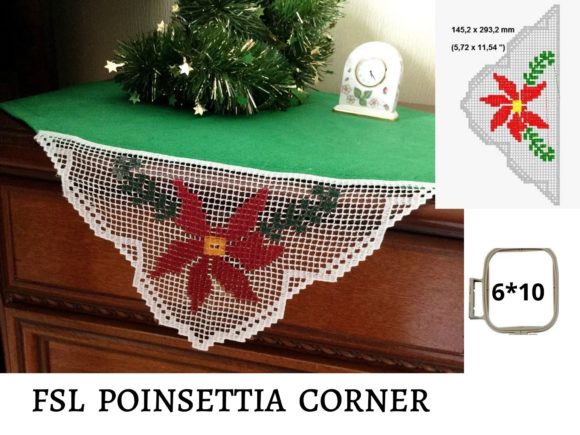
Reviewing Poinsettia Corner FSL for Craft Fair Success
As an embroidery designer who has spent countless weekends standing behind booths at local markets, I have learned that the difference between a browser and a buyer often comes down to visual impact and perceived value. When I first loaded the Poinsettia Corner FSL into my software, my immediate thought was not just about the stitch path, but about its potential as a high-margin craft fair product. This design promises to be delicate and festive, offering a unique touch to holiday items. But does it hold up under the scrutiny of a busy marketplace? Let us break down why this machine embroidery design might be the secret weapon your small shop needs this season.
First Impressions: Elegance Meets Festivity
The title alone suggests a specific aesthetic. "Corner" implies placement strategy, while "FSL" (Free Standing Lace) indicates a level of sophistication that customers love. Upon reviewing the preview, the design feels less like a bold, cartoonish graphic and more like an elegant, premium accent. It strikes a balance between rustic charm and modern minimalism. For the Etsy seller or boutique maker, this is crucial. You do not want a design that screams too loudly; you want one that whispers quality. The delicate nature of the lacework suggests a soft, decorative feel that elevates a simple item into a giftable treasure.
However, beauty in digital form does not always translate to physical durability. The description notes that this embroidery file comes with multiple formats, which is essential for compatibility. Yet, the real test is how it behaves on fabric. FSL designs are notorious for being fragile if not executed correctly. This design appears to have enough structural integrity to stand alone, but it requires precision. It is not a slap-on-and-go motif; it is a feature piece.
Strategic Product Placement for Maximum Sales
When preparing my booth display, I always ask: where does this design shine? For Poinsettia Corner FSL, the answer is clear. It is not designed to cover an entire tote bag. Instead, it thrives as an accent. Imagine a crisp white linen tote bag design where the corner features this intricate lace poinsettia. It draws the eye without overwhelming the canvas. Similarly, for apron embroidery, placing this on the pocket corner or the hem adds a touch of handmade luxury that mass-produced items lack.
Kitchen textiles are another goldmine. A tea towel embroidery project using this design can transform a basic cotton towel into a holiday heirloom. Because it is a corner design, it leaves plenty of negative space, which appeals to buyers who prefer clean, uncluttered aesthetics. I also see huge potential for embroidered patch applications. If you stabilize the FSL correctly, you can create standalone ornaments or badges that customers can pin onto coats or bags. These small, low-cost items are perfect impulse buys at a craft fair.
Do not overlook home decor. Pillow covers benefit immensely from corner placements, allowing the design to frame the cushion rather than dominate it. For market bags and handmade gifts, this design adds a layer of brand consistency. It says, "This was made with care," which is exactly what drives engagement in a crowded marketplace.
Production Realities and Practical Notes
While the visual appeal is high, we must address the practicalities of production. FSL designs are sensitive to stitch density and tension. If the density is too high, the lace becomes stiff and brittle. If it is too low, it loses its shape. Before committing to a large batch, you must test the design on scrap fabric. Check your thread colors carefully. Traditional red and green work, but consider metallic gold or cream for a more upscale look that photographs beautifully for online listings.
Another critical factor is the hoop size. Ensure your machine can accommodate the required area without re-hooping, which can shift the alignment. Since this is a corner design, precise placement is key. Use water-soluble stabilizer generously, as recommended for all FSL work. The fabric texture also matters. While FSL stands alone, if you are attaching it to a textured towel or thick denim, ensure the backing is secure. Dark fabrics can sometimes make delicate lace details disappear, so contrast is vital for visibility.
For those selling digitally, remember that this is a digital embroidery file. Your customers will need clear instructions on stabilizer types and thread recommendations. Providing a printable mockup or detailed design assets can reduce support queries and increase customer satisfaction. Always confirm commercial licensing terms before selling finished products. The description mentions multiple files, but it does not specify license limits, so verify this with the creator to protect your business.
Why This Design Sells
In the world of commercial embroidery, clarity is king. Poinsettia Corner FSL is easy to understand at a glance. Customers walking past your booth do not have time to decipher complex patterns. They see a flower, they recognize the holiday theme, and they appreciate the lace texture. It works as both a small accent and a focal point, depending on the item. This versatility makes it a repeatable asset for your product line.
Furthermore, this design enhances the perceived value of your small shop product. Handmade items often compete on uniqueness. A generic printed poinsettia is cheap; an embroidered lace poinsettia is artisanal. This distinction allows you to price your items higher, reflecting the time and skill involved. It strengthens your booth display by adding texture and depth to your samples. Whether used on caps, pouches, or pillows, it creates a cohesive holiday collection that feels curated and professional.
Ultimately, the success of this design depends on your execution. Test it, refine your stabilizer choice, and present it on high-quality materials. If you do, Poinsettia Corner FSL will not just be another file in your library; it will be a cornerstone of your holiday sales strategy. It offers the perfect blend of festive charm and elegant simplicity that today’s handmade market craves.