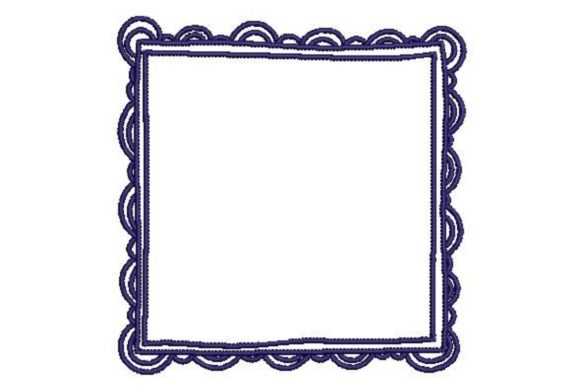
Square Doodle Frame: A Designer’s Review for Business Use
As an embroidery designer who has spent years digitizing and testing files for commercial clients, I approach every new machine embroidery design with a critical eye. It is not just about whether a pattern looks cute on a screen; it is about how it performs under the needle, how it holds up after washing, and most importantly, how it elevates a brand. Today, I am reviewing the Square Doodle Frame, a piece from the Borders category that promises to add a professional touch to various projects. For small business owners, Etsy sellers, and apparel decorators, understanding the practical application of this embroidery file is crucial before adding it to your digital library.
First Impressions: Balancing Playfulness and Professionalism
The title "Square Doodle Frame" suggests a blend of structure and whimsy. In the world of branding, this combination is powerful. A perfect square can feel rigid or corporate, but adding a "doodle" element softens the edges, making the design feel approachable, handmade, and friendly. When I first visualize this frame, I see it as a versatile asset for creative studios, bakeries, florists, and boutique shops. It does not scream "corporate uniform," which is often a good thing for lifestyle brands. Instead, it offers a decorative boundary that can contain logos, monograms, or short text without overwhelming them. This balance is essential for creating small business merch that feels authentic rather than mass-produced.
Real-World Applications for Branded Merchandise
The true test of any digital embroidery file is its versatility across different products. Here is how I envision the Square Doodle Frame performing in real business scenarios:
- Embroidered Patches: This is perhaps the strongest use case. A square frame works exceptionally well for iron-on or sew-on patches. You can place a client’s logo or a witty phrase inside the doodle border. Because frames define space clearly, they make excellent standalone embroided patch designs that customers can buy separately or have added to jackets and bags.
- Apron Embroidery: For cafes and bakeries, staff aprons are walking billboards. Placing this frame on the chest pocket area creates a neat, contained look. It frames the business name or the employee’s name neatly, adding a layer of polish to the uniform.
- Tote Bag Design: Canvas tote bags are a staple for retail shops. The Square Doodle Frame can serve as a central graphic element. Since tote bags have a large, flat surface, the frame can be scaled up to create a bold statement piece that highlights seasonal promotions or brand slogans.
- Cap Embroidery: While caps usually feature curved designs, a small, simplified version of this frame could work on the side panel or as a subtle accent above the brim. However, caution is needed here regarding curvature, which I will address later.
- Product Packaging Accents: Beyond apparel, this design can be embroidered onto fabric tags attached to handmade products. It adds a premium feel to handmade product lines, signaling attention to detail and care.
Technical Considerations and Stitch Density
While the aesthetic appeal is high, we must discuss the technical execution. The description notes that this machine embroidery design comes with multiple file formats, which is standard and necessary for compatibility with various machines. However, the term "doodle" implies irregular lines and potentially varying stitch density. As a designer, I advise you to check the stitch count and density settings before running a full production batch.
If the doodle lines are too dense, they may cause puckering, especially on lighter fabrics like cotton tees or linen tote bags. Conversely, if the stitches are too sparse, the frame might look flimsy and fail to provide the "professional touch" promised. Always test the design on a scrap piece of the actual fabric you intend to use. Pay close attention to the thread colors you choose. A high-contrast thread against the fabric will make the doodle pop, while a tonal choice will offer a subtle, elegant watermark effect.
Where to Use Caution
Not every surface is ideal for a square frame. Be cautious when applying this design to:
- Curved Surfaces: Caps and rounded sleeves can distort square shapes. If the hoop is not stabilized perfectly, the square may look like a trapezoid. Always use a strong stabilizer and consider hooping techniques that minimize distortion.
- Tiny Sizes: If you shrink the Square Doodle Frame too much for a small label or tiny patch, the "doodle" details may merge into a solid blob. Ensure the design retains its clarity at smaller scales.
- Textured Fabric: Heavy textures like terry cloth or thick fleece can hide fine doodle lines. Test extensively to ensure the design remains visible and crisp.
- Dark Uniforms: If stitching on dark navy or black uniforms, ensure your thread contrast is sufficient. Light threads on dark fabric require careful tension settings to avoid thread breakage.
Enhancing Brand Identity and Customer Trust
Consistency is key to building brand identity. Using a signature frame like the Square Doodle Frame across various touchpoints creates visual consistency. When a customer sees the same framed aesthetic on your Instagram posts, your website, your packaging tags, and your staff uniforms, it builds recognition. This visual coherence signals professionalism and reliability. For commercial embroidery projects, having a library of reliable design assets allows you to quickly create cohesive collections. Whether you are designing for a pet brand or a local florist, this frame can become part of their visual language, enhancing buyer engagement and perceived value.
Practical Designer Notes for Production
Before you commit to using this embroidery file for client work or your own inventory, follow these steps:
- Test in Black and White First: Remove color from the equation to evaluate the shape and stitch flow. If it looks good in monochrome, it will likely look great in color.
- Check Hoop Size Compatibility: Confirm that the design fits within your standard hoop sizes. The description mentions multiple formats, but always verify the dimensions match your machine’s capabilities.
- Create a Printable Mockup: Before stitching, use software to place the design on a digital mockup of a tote bag or shirt. This helps visualize scale and placement for client approval.
- Verify Commercial Licensing: Although the description urges you to "add it to your collection," always confirm the license terms. Ensure you have the right to use the design for custom apparel and goods intended for sale.
- Inspect Spacing: Look at the gap between the doodle lines and the inner square. Ensure there is enough room for text or logos without the stitches overlapping or crowding.
In conclusion, the Square Doodle Frame is a promising addition to any embroidery designer’s toolkit. It bridges the gap between playful creativity and structured professionalism. By testing it thoroughly on different fabrics and understanding its limitations on curved or textured surfaces, you can leverage this Borders design to create high-quality, branded merchandise that resonates with customers. Whether used for a simple tote bag design or a complex uniform program, this frame has the potential to elevate the finished product and strengthen your brand’s visual presence.